
🧬 BPC-157: An In-Depth Look at This Research Peptide
Disclaimer: This article is for educational use only. BPC-157 is provided strictly for laboratory research. It is not approved for human or veterinary use, and any references to biological activity relate only to animal or in vitro studies.
⸻
📘 What Exactly Is BPC-157?
BPC-157, or Body Protection Compound-157, is a synthetic peptide made up of 15 amino acids. It’s based on a segment of a naturally occurring compound found in human gastric juices. Over the years, it has sparked significant interest in the research community because of its potential roles in healing and regeneration—as observed in controlled lab environments.
Despite its growing popularity in scientific circles, BPC-157 remains a research-only substance. It is not approved by the FDA or any other regulatory authority for medical use.
⸻
🧬 How Might BPC-157 Work? (Based on Animal Studies)
Researchers have observed some compelling effects in animal models, pointing to several possible mechanisms:
• It seems to encourage the growth of new blood vessels by stimulating VEGF (vascular endothelial growth factor).
• It may support better circulation and tissue repair through interaction with nitric oxide pathways.
• There’s some evidence it can regulate genes related to inflammation and healing.
• It also appears to have protective effects on cells under physical or chemical stress.
It’s important to emphasize that these findings come from preclinical research and haven’t been tested or confirmed in human trials.
⸻
🔬 What Areas of Research Involve BPC-157?
- Healing Tendons, Ligaments, and Muscles
One of the first things that drew attention to BPC-157 was its apparent ability to speed up healing in tendons and ligaments. In one study, rats with Achilles tendon injuries recovered more quickly when BPC-157 was introduced.
- Stomach and Gut Protection
Because it originates from stomach proteins, BPC-157 has been studied for gastrointestinal effects. In animal models, it helped reduce the severity of ulcers and other stomach lining injuries caused by NSAIDs, alcohol, or stress.
- Nerve and Brain Regeneration
Some animal studies have looked into BPC-157’s potential neuroprotective properties. For example, it appeared to help with peripheral nerve healing in rats and reduce damage from inflammation in the brain.
- Bone and Connective Tissue Recovery
Researchers have also begun exploring how BPC-157 may support bone healing and recovery from musculoskeletal injuries, especially in trauma-based models.
⸻
📜 Legal Overview: What You Need to Know
In most countries, including the U.S., BPC-157 is not on the list of controlled substances. That said, it’s still not approved for use in humans or animals outside of research.
• It’s sold only for laboratory research.
• It must be clearly labeled “Not for human consumption.”
• If you’re handling it in a research setting, you should follow all applicable safety protocols and regulations.
Not for human use. Research purposes only.
Here’s your copy-and-paste ready blog post on Retatrutide, now enhanced with embedded PubMed links for added credibility and SEO impact:
⸻
🧬 Retatrutide: A Comprehensive Look at This Multi‑Agonist Peptide in Research
Disclaimer: This article is for informational and educational purposes only. Retatrutide is an investigational compound not approved for medical or human use. All content refers to laboratory or clinical research models.
⸻
📘 What Is Retatrutide?
Retatrutide (research code LY3437943) is an experimental triple receptor agonist peptide developed by Eli Lilly. It simultaneously targets:
• GLP‑1 (Glucagon‑like peptide‑1)
• GIP (Glucose‑dependent insulinotropic polypeptide)
• Glucagon receptors
This unique GLP‑1 + GIP + glucagon agonism distinguishes it from therapies like semaglutide or tirzepatide and places it at the forefront of multi‑agonist peptide research.
Key reference: LY3437943 in vitro and mouse obesity models showed decreased body weight and improved glycemic control .
⸻
🧬 How Does Retatrutide Work?
As a triple hormone receptor agonist, Retatrutide supports metabolic regulation by:
• Enhancing insulin sensitivity and lowering blood sugar
• Suppressing appetite and food intake
• Promoting energy expenditure via glucagon receptor stimulation
• Supporting fat loss and liver lipid metabolism
Its multifunctional mechanism gives it potential advantages as an experimental obesity and diabetes therapy.
⸻
🔬 Clinical Research Overview
✅ 1. Obesity and Weight Loss
A 2023 Phase 2 NEJM trial found:
• Mean weight loss was dose-dependent: –24.2% at 12 mg after 48 weeks .
✅ 2. Type 2 Diabetes
A Phase 1b trial in diabetic patients showed:
• Significant improvements in HbA1c and weight, with favorable safety .
✅ 3. Liver Fat & NAFLD
Phase 2 subsudy demonstrated:
• Up to 82% reduction in liver fat after 24 weeks in MASLD patients .
✅ 4. Anti‑Tumor Effects
Preclinical mouse studies revealed:
• STRONG obesity-linked tumor suppression and immune reprogramming benefits .
⸻
⚖️ Legal & Accessibility Status
• Not approved by FDA, EMA, or other agencies
• Not for sale or human use — available only in clinical trials
• Any distribution outside approved trials is illegal and unsafe
⸻
🔍 Retatrutide vs Semaglutide & Tirzepatide
Molecule Receptor Targets Max Weight Loss (Phase 2)
Semaglutide GLP‑1 only ~15%
Tirzepatide GLP‑1 + GIP ~20%
Retatrutide GLP‑1 + GIP + Glucagon ~24.2% @ 12 mg
Retatrutide’s glucagon activity may offer greater energy expenditure and fat reduction than dual agonists .
⸻
🧠 Key Takeaways
• Retatrutide is a triple-agonist peptide in active clinical evaluation.
• Shows strong promise for obesity, diabetes, NAFLD, and even cancer outcomes.
• All findings are preclinical or early-phase; not approved for human use.
• Watch for upcoming Phase 3 trials that could define its future applications.
⸻
📚 PubMed References
• Coskun et al. Cell Metabolism. 2022; Phase 1 data on LY3437943: balanced agonist, once‑weekly dosing
• Jastreboff et al. NEJM. 2023; Phase 2 trial, –24.2% weight loss at 48 weeks
• Rosenstock et al. Lancet. 2023; Dose escalation in Type 2 diabetics
• Substudy on liver fat reduction (82%)
• Preclinical cancer suppression data
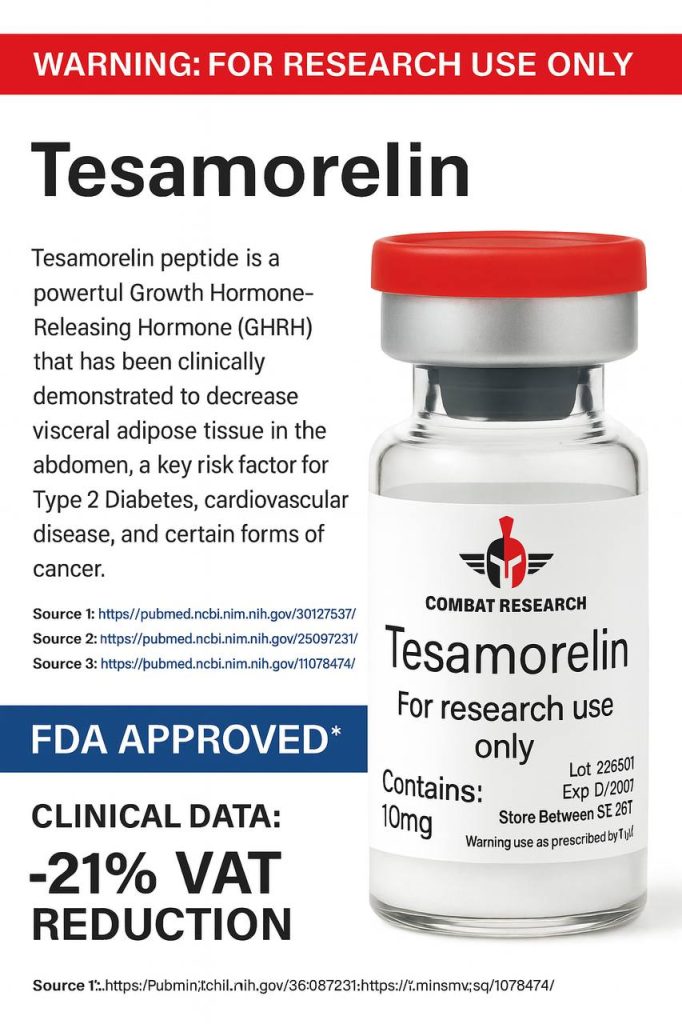
Tesamorelin – Research-Grade Peptide (10mg)
Combat Research
Description:
Tesamorelin is a synthetic Growth Hormone-Releasing Hormone (GHRH) analog developed to stimulate the pituitary gland to increase endogenous growth hormone (GH) secretion. Clinically proven and FDA-approved for the treatment of HIV-associated lipodystrophy, Tesamorelin has shown significant promise in reducing visceral adipose tissue (VAT), improving liver health, and supporting metabolic function.
Key Research-Backed Benefits:
• Reduces Visceral Fat:
In placebo-controlled studies, Tesamorelin demonstrated a 21% reduction in VAT—a key factor in metabolic syndrome, Type 2 Diabetes, and cardiovascular disease.
👉 PubMed – NEJM, 2010 (https://pubmed.ncbi.nlm.nih.gov/20554983/)
• Improves Liver Fat in NAFLD/NASH:
Tesamorelin has been shown to significantly reduce liver fat and slow fibrosis progression in patients with HIV-associated non-alcoholic fatty liver disease (NAFLD).
👉 PubMed – Lancet HIV, 2021 (https://pubmed.ncbi.nlm.nih.gov/34246363/)
• Preserves Cognitive Function:
Studies suggest Tesamorelin may enhance cognition and brain metabolism in older adults at risk for Alzheimer’s disease.
👉 PubMed – JCEM, 2020 (https://pubmed.ncbi.nlm.nih.gov/31971596/)
• Favorable Safety Profile:
Unlike traditional GH therapy, Tesamorelin has a lower risk of glucose intolerance or insulin resistance.
👉 PubMed – AIDS, 2016 (https://pubmed.ncbi.nlm.nih.gov/27367488/)
Product Details:
• Contents: 10mg Tesamorelin Acetate (Lyophilized Powder)
• Purity: ≥98% (HPLC verified)
• Storage: Store between 2°C–8°C. Protect from light.
• Form: Sterile vial, intended for reconstitution
• Use: For research use only. Not for human or veterinary use.
⸻
Warning:
Tesamorelin is intended strictly for laboratory research. Misuse outside of regulated clinical protocols may result in health risks and violates FDA regulations.
Researchers continue to study Melanotan II (MT2) for its interactions with the melanocortin receptor system, a pathway involved in pigmentation, appetite signaling, and sexual behavior in experimental models. At CombatResearch.is, we supply high-purity compounds intended exclusively for laboratory and in-vitro research so scientists can examine these mechanisms with precision.
🔬 What Researchers Investigate About MT2
1️⃣ Receptor Activity & Pigmentation Mechanisms
MT2’s affinity for the MC1R receptor has made it an interesting subject in pigmentation-related research. Studies explore:
• Melanin synthesis pathways
• Photoprotective signaling
• Melanocortin receptor cross-talk
🌡️ 2️⃣ Libido-Related Mechanisms (Research Context Only)
Peer-reviewed studies note that MT2 also interacts with MC4R and MC3R, which are part of the neural pathways related to sexual arousal in animal and in-vitro models.
Research suggests scientists examine:
• Erecholytic signaling patterns
• Hypothalamic response to melanocortin analogs
• The cascade of neurons activated by MC4R stimulation
Example PubMed search:
https://pubmed.ncbi.nlm.nih.gov/?term=melanotan+II+MC4R
❗ This section is not about human effects—this refers solely to mechanistic research and receptor interaction pathways studied in animals or cell models.
🍽️ 3️⃣ Appetite & Food-Avoidance Signaling in Research
MT2’s involvement with the melanocortin appetite pathway connects it to studies exploring food intake behavior.
Researchers on PubMed frequently investigate:
• The role of MC4R in satiety
• How melanocortin peptides influence feeding suppression in test subjects
• Neuron activation patterns tied to energy regulation
Example PubMed search:
https://pubmed.ncbi.nlm.nih.gov/?term=melanocortin+MC4R+appetite
These are lab-observed mechanistic findings, not clinical claims.
💬 4️⃣ What Reddit Research Communities Discuss
Across research-focused Reddit subcommunities, users often exchange notes about:
• Study design: How MT2 is applied in receptor-binding or melanocortin signaling experiments.
• Experimental patterns:
– Increased attention to MC4R-linked libido pathways in animal models
– Suppressed feeding behaviors in certain research scenarios
• Data comparison: Labs comparing peptide stability, degradation rate, and receptor affinity curves.
• Safety-focused scientific discussion: Emphasis on keeping research confined to proper laboratory settings and following regulations.
Reddit discussions are anecdotal and community-generated, but they often act as starting points for researchers seeking publicly shared experimental insights before consulting PubMed.
🔗 Explore the MT2 Research Page
⚠️ Required Research Use Disclaimer
All products are sold strictly for scientific, laboratory, and in-vitro research purposes only.
Not for human consumption, medical, cosmetic, or veterinary use. No clinical claims are made or implied.
All information above is educational and based on publicly available scientific literature and general research-community observations.
⭐️ Noopept: The Nootropic Everyone Is Talking About
🔥 Noopept (CAS 157115-85-0) continues to be one of the most talked-about cognitive enhancers online — from research forums to Reddit to nootropic communities worldwide. The hype isn’t random: the molecule has a fascinating research profile and a huge amount of anecdotal discussion.
📚 Research Highlight
One of the most frequently cited studies on Noopept and neuroprotective activity:
👉 https://pubmed.ncbi.nlm.nih.gov/12596519/
(Search “Noopept” on PubMed for more peer-reviewed papers.)
🗣 What Reddit users commonly report (anecdotal only):
• Increased mental clarity or “rapid recall moments”
• Sharper thought-to-speech connection
• Notable reduction in mental fatigue
• Subtle mood brightening / less cognitive “drag”
• Occasionally: headaches or stimulation sensitivity
• Strong variability — “either noticeable or extremely subtle”
(These are user stories, not medical claims.)
🔟 Noopept FAQ — Advanced, Engaging & Share-Friendly
1️⃣ What exactly is Noopept?
A synthetic dipeptide-derived nootropic developed in Russia, widely discussed for potential cognitive-support and neuroprotective properties.
2️⃣ Does Noopept work like racetams?
Mechanistically related, but not identical. Reddit users often describe it as “cleaner, faster, and more compact” in subjective effect, though research shows distinct activity patterns.
3️⃣ What mechanisms do researchers focus on?
• NGF & BDNF expression changes
• Glutamatergic modulation
• Antioxidant stress-response pathways
• Potential neuroprotective signaling cascades
(These findings come from animal & cell studies — not confirmed human outcomes.)
4️⃣ Why do people compare it to PRL-8-53, Phenylpiracetam, or Aniracetam?
Because user reports place Noopept in the category of “clarity & memory-oriented” nootropics, but with a sharper subjective profile.
5️⃣ How fast do effects come on?
Many Reddit reports describe “quick onset,” but the intensity and detectability vary dramatically between individuals.
6️⃣ What are the most common user-reported downsides?
• Head pressure / headaches
• Irritability or overstimulation in sensitive users
• Diminishing subjective effects with continuous use
(Again: anecdotal, not clinical data.)
7️⃣ Is there tolerance?
User discussions frequently mention “fading effects” with long-term use. Research on human tolerance is limited.
8️⃣ What’s the legal status?
Highly region-dependent. In many countries, Noopept is unscheduled but not approved as a medical product. Always check local regulations.
9️⃣ Does it stack with other nootropics?
People talk about pairing it with choline donors or adaptogens, but there’s no clinical evidence supporting combinations. Approaching stacks cautiously is widely encouraged in harm-reduction communities.
🔟 Is there human clinical data?
Very limited. Most published work is animal or in vitro. That’s why so many people rely on community-shared experiences — but research remains essential.
✨ Final Thoughts
Noopept remains one of the most discussed compounds in cognitive-enhancement circles because of its tight molecular profile, intriguing research, and large pool of online user reports. If you’re exploring nootropics, always mix curiosity with caution and solid research.
#️⃣ Hashtags:
#Noopept #Nootropics #Biohacking #BrainHealth #SmartDrugs #CognitiveScience #Neuroprotection #NootropicCommunity #SupplementResearch #PubMed #CAS157115850 #RedditNootropics
What are RAD‑140 and LGD‑4033
- Both RAD‑140 and LGD‑4033 belong to the class Selective Androgen Receptor Modulators (SARMs). They bind to androgen receptors (AR) — primarily in muscle and bone — with the goal of promoting anabolic (muscle‑building, bone‑preserving) effects while ideally minimizing effects on other androgen-sensitive tissues. Wikipedia+2Wikipedia+2
- Neither is approved by regulatory authorities for general medical use; they remain investigational in most places. NPC Hello+2Wikipedia+2
- Both are prohibited under competition‑sport anti‑doping rules. NPC Hello+2Wikipedia+2
⚙️ Differences: Potency, Effects & What Evidence Exists
✅ RAD‑140 (Testolone)
- RAD‑140 is often described as one of the “strongest” SARMs in terms of anabolic potency and ability to stimulate muscle/bone growth. Swolverine+2Wikipedia+2
- Preclinical (animal) studies and limited human-use reports suggest it can have potent anabolic effects — potentially more aggressive muscle and strength gains than many other SARMs. Swolverine+2Wikipedia+2
- However, there are documented safety concerns: for example, at least one case report links RAD‑140 to severe liver injury (jaundice, cholestatic liver damage) after several weeks of use. PMC+1
- Use may also carry risks for cardiovascular, metabolic, hormonal systems, similar to other SARMs — especially when misused or taken at high doses. MDPI+2Cleveland Clinic+2
✅ LGD‑4033 (Ligandrol)
- LGD‑4033 is among the most studied SARMs in humans. Some controlled trials (e.g. in older adults with hip fractures) have shown that LGD‑4033 can significantly increase lean body mass and functional performance compared with placebo. PMC+2Physiological Society Online+2
- Because it tends to produce “lean, controlled” gains (rather than aggressive bulking), it’s often described as “milder” or more tolerable than high‑potency SARMs. Swolverine+2Wikipedia+2
- That said — LGD‑4033 is not free of risks. There are case reports of adverse effects including liver injury and possibly cardiovascular or metabolic harm associated with SARM use. PMC+2Cleveland Clinic+2
- As with other SARMs, long-term safety — especially outside controlled clinical settings — remains uncertain. GoodRx+2Cleveland Clinic+2
⚠️ Risks & Safety — Shared and Different Trends
- All SARMs — including RAD‑140 and LGD‑4033 — carry risks: hormonal disruption, possible liver toxicity, metabolic effects, cardiovascular side‑effects, unknown long‑term consequences. NPC Hello+2MDPI+2
- For RAD‑140, there are confirmed cases of serious liver injury in humans after recreational use. PMC+1
- Even for LGD‑4033 — while somewhat “better studied” — there’s evidence linking SARM use to adverse outcomes, particularly when used outside medical supervision (high doses, improper cycles). PMC+2GoodRx+2
- Regulatory and medical‑expert guidance strongly warns against non‑clinical, recreational use of SARMs due to the lack of approved indications + safety uncertainties. U.S. Food and Drug Administration+2Cleveland Clinic+2
🎯 Practical Comparison: When People Use Them — What the Reports Say (with High Uncertainty)
| Goal / Use‑Case | What RAD‑140 tends to (claim to) Offer | What LGD‑4033 tends to (claim to) Offer |
|---|---|---|
| Rapid bulking / muscle mass & strength gains | Strong anabolic potential; often favored for aggressive bulking or major strength increases. | More modest, controlled lean mass gains — less dramatic but potentially more stable / tolerable. |
| Lean gains / body recomposition / maintenance | Less often favored — higher potency comes with higher risk; gains may be aggressive but side‑effects higher. | Frequently used when goal is lean mass maintenance or slow, manageable muscle growth with lower side‑effect risk. |
| Medical or therapeutic-like application (muscle wasting, recovery, bone loss) | No approved human clinical indication; evidence limited, risk high — irresponsibly used. | More human-based research exists; but still unapproved — even “medical potential” is speculative and unconfirmed. |
| Risk tolerance / safety‑caution | Higher potency → higher risk of harm (liver, metabolic, hormonal, cardiovascular). | Lower potency / more moderate profile — BUT still significant risk, especially with misuse / non‑clinical use. |
🧪 Why Comparison Is Hard / What Data Is Missing
- Neither drug is approved for general human use. Most “use” is off‑label, unsupervised, and unregulated. That makes systematic data on long-term outcomes, side effects, and real-world harm unreachable.
- Many products sold as RAD‑140 or LGD‑4033 may be mislabeled, contaminated, or adulterated — hampering any attempt to reliably compare effects or safety. Wikipedia+2GoodRx+2
- Most clinical studies (particularly for RAD‑140) remain limited or focused on non‑healthy populations (e.g. oncology), not healthy adults using them for bodybuilding. Thus extrapolations to “fitness use” are speculative. PMC+2Wikipedia+2
📌 My Assessment: “Relative Strength vs Relative Risk”
- If one were to evaluate purely on potential for muscle/strength & aggressiveness, RAD‑140 appears “stronger” — higher anabolic potency, more aggressive gains.
- If one were to evaluate based on balance / milder profile / more “moderate” gains with possibly fewer adverse effects — LGD‑4033 appears “safer” (relatively) and “more measured.”
- But “safer” does not mean “safe.” Both carry meaningful and documented risks — including serious liver injury, hormonal disruption, cardiovascular/metabolic effects — especially when used outside controlled, clinical settings.
🔍 Overview: What each one is
LGD‑4033 (Ligandrol)
- A non‑steroidal SARM with high affinity for the androgen receptor (AR). Wikipedia+2PMC+2
- Has undergone limited human studies. In those trials, LGD‑4033 produced dose‑dependent increases in lean body mass. PMC+2Wikipedia+2
- Arguably the most studied SARM in humans. Wikipedia+2NPC Hello+2
S‑23
- Also a non‑steroidal SARM. Preclinical (animal) data suggest it has very strong AR affinity and potent anabolic effects. PMC+2ScienceDirect+2
- In studies with rodents, S‑23 increased lean muscle mass, bone mineral density, reduced fat mass, and even suppressed spermatogenesis (indicating strong systemic androgenic effect in those models). PMC+2Translational Andrology and Urology+2
- There is no reliable published human clinical trial data for S‑23 — almost all evidence is preclinical. WebMD+2Translational Andrology and Urology+2
⚙️ Relative “Strength” / Effects: Anabolism, Body‑Comp, Hormones
| Feature | LGD‑4033 | S‑23 |
|---|---|---|
| Anabolic / muscle‑building (human / preclinical) | Demonstrated lean mass gains in human trials. PMC+2Wikipedia+2 | Potent anabolic effects in animals (muscle + bone + fat‑loss) — but no verified human data. PMC+2phoenixsupplementstore.co.uk+2 |
| Body composition (fat loss / “cut / shredded” look) | Less often reported as “cutting SARM”; more for mass/lean gains. | Animal reports suggest fat loss + lean retention — often described (in non‑scientific forums) as “dry” or “hard” look. SarmsMentor+2phoenixsupplementstore.co.uk+2 |
| Hormonal suppression / endocrine effects | Clinical trial data show dose‑dependent suppression of total (and sometimes free) testosterone, SHBG; hormone levels may recover after discontinuation. PMC+2Wikipedia+2 | Preclinical & some case‐report data (for SARMs broadly) show suppression of hormonal axis (testosterone, LH/FSH) — likely even more profound with S‑23 given its potency. SpringerLink+2WebMD+2 |
| Bone & other anabolic effects (preclinical) | Promising anabolic potential (muscle) — main focus so far. Healthy Male+1 | In animals, also improves bone mineral density, decreases fat mass — broader anabolic profile. PMC+2Translational Andrology and Urology+2 |
⚠️ Safety, Risks & Unknowns
- Both are part of the class Selective Androgen Receptor Modulators (SARMs). As a class, SARMs have been associated — even in limited human data or case‑reports — with concerning effects: hormonal disruption, possible lipid changes, liver stress or toxicity, cardiovascular risks, and other unknown long‑term effects. Cleveland Clinic+2MDPI+2
- For LGD‑4033: some trials report reductions in testosterone + SHBG, changes in sex‑hormone balance; long‑term safety remains unknown. PMC+2Wikipedia+2
- For S‑23: because there’s no reliable human data, the risks are much less predictable. Preclinical studies and limited metabolic investigations suggest potent activity — which raises concern that side‑effects (hormonal, liver, metabolic, fertility) might be more severe. ScienceDirect+2ResearchGate+2
- Regulatory and medical authorities warn that SARMs (including LGD‑4033, S‑23) are unapproved, often sold illicitly, and their use carries unknown but potentially serious health risks. Cleveland Clinic+2NPC Hello+2
🎯 What “S‑23 vs LGD‑4033” Seems to Mean — in a Risk/Benefit Frame
- If the goal is adding lean mass / strength, LGD‑4033 has at least some human data supporting muscle gains — though with hormonal suppression.
- If the goal (or desired effect) is more of a “cut, lean, shredded, low-fat, vascular” look (as some bodybuilding‑forum sources claim for S‑23), S‑23’s animal data suggest it might have more fat‑loss + lean‑retention potential — but that’s speculative for humans, and unpredictably risky.
- Because S‑23 appears to be more potent (in animals), the potential for side‑effects or suppression is probably higher — especially in uncontrolled, “real‑world” (non‑clinical) use.
- There is far more uncertainty with S‑23 — less data, no clinical trials, unknown long‑term consequences. LGD‑4033 — while also risky — is somewhat “less unknown” by comparison.
🌐 Scientific & Regulatory Context
- The broader scientific and medical community remains skeptical of SARMs as “safe steroids.” Many reviews emphasize that SARMs (including both LGD‑4033 and S‑23) have not been validated for long‑term safety in humans. PMC+2Wikipedia+2
- A recent review found that SARM use has been associated with liver enzyme elevations and, in some cases, suspected liver injury — especially in non‑medical, high-dose or unregulated use. MDPI+1
- Use of SARMs for performance or physique enhancement remains outside approved medical practice; they are frequently sold illicitly, often mislabeled or with poor quality control. Wikipedia+2NPC Hello+2
🧪 Why It’s Hard to “Declare a Winner”
A “winner” would require: (1) robust human data showing safety + efficacy; (2) predictable, reproducible outcomes. Neither S‑23 nor LGD‑4033 meets those criteria.
- LGD‑4033 has some human data — but limited in duration and scope.
- S‑23 has no credible human data, only animal/preclinical findings — meaning extrapolating to humans is speculative and risky.
- Both carry potentially serious health risks, especially when used outside controlled settings.
🔵 AMINO TADALAFIL — BENEFITS, REDDIT USES & PUBMED LINKS
⚠️ Quick Clarification
There are no formal PubMed studies on “Amino Tadalafil” specifically.
The available research is on tadalafil, the FDA-approved parent compound.
“Amino tadalafil” is an unregulated research-chemical variant marketed in supplement communities.
✅ EVIDENCE-BASED BENEFITS (from Tadalafil Research)
1. Improves Erectile Function
Tadalafil is clinically proven to improve ED symptoms.
PubMed: https://pubmed.ncbi.nlm.nih.gov/15180622/
2. Helps Urinary Symptoms (BPH / LUTS)
Tadalafil improves flow, frequency, and overall urinary comfort.
PubMed: https://pubmed.ncbi.nlm.nih.gov/23346990/
3. Enhances Endothelial (Blood Vessel) Function
Daily tadalafil improved:
- Lean muscle mass
- Endothelial health
- Circulation
PubMed: https://pubmed.ncbi.nlm.nih.gov/28133708/
4. May Reduce Mortality, Cardiovascular Risk & Dementia Risk (Observational Study)
A large cohort showed PDE-5 inhibitors (incl. tadalafil) were associated with:
- Lower all-cause mortality
- Lower cardiovascular events
- Lower dementia risk
PubMed: https://pubmed.ncbi.nlm.nih.gov/39532245/
5. FDA-Approved for Pulmonary Arterial Hypertension
Tadalafil improves exercise capacity and reduces pulmonary pressure.
Mechanism explained:
PDE-5 inhibition → increased cGMP → vasodilation → reduced pulmonary resistance.
Reference: https://www.ncbi.nlm.nih.gov/books/NBK603743/
🔶 REDDIT-REPORTED (ANECDOTAL) BENEFITS OF AMINO TADALAFIL
These are not clinically proven, but widely discussed in r/Nootropics, r/Bodybuilding, and research-chemical communities.
🔹 1. Stronger “muscle pumps” in the gym
Users report:
- Increased vascularity
- Better oxygen delivery
- Fuller muscles during training
🔹 2. Longer-lasting effects than standard tadalafil
Many claim:
- Smoother onset
- Longer half-life
- More sustained vasodilation
🔹 3. Improved mood or mental sharpness
Not scientifically validated — anecdotes mention:
- Mild mood enhancement
- Less brain fog
- Subtle cognitive clarity
Likely due to improved blood flow, not neurological action.
🔹 4. Better endurance and reduced fatigue
Some users report:
- Improved cardio capacity
- Less “pump pain”
- Easier breathing during exertion
Again: anecdotal, not clinically measured.
🔹 5. Sexual performance enhancement
Similar to tadalafil:
- Easier erections
- Longer function
- More confidence due to reduced performance anxiety
🧠 HOW IT WORKS
Both tadalafil and the amino variant inhibit PDE-5, which increases cGMP levels and causes vasodilation (wider blood vessels).
This leads to:
- Better circulation
- Improved erectile response
- Reduced urinary symptoms
- Improved vascular endurance
⚠️ SIDE EFFECTS REPORTED
Both clinical and anecdotal users report:
- Headache
- Flushing
- Nasal congestion
- Back pain
- Lower blood pressure
- Rare: visual changes
Never mix with:
- Nitrates
- Certain blood pressure medications
- Recreational stimulants
DISCLAIMER
Amino tadalafil is NOT an FDA-approved medication.
All information above is for educational purposes only and is NOT medical advice.
Talk to a licensed healthcare professional before using tadalafil or any research chemical, especially if you have heart conditions, blood pressure issues, or take prescription medications.
Reddit reports are anecdotal, not scientific.
PubMed references apply to tadalafil, not specifically amino tadalafil.
What Is SNAP-8?
SNAP-8 (Acetyl Octapeptide-3) is an 8–amino acid peptide derived from Argireline (Acetyl Hexapeptide-8).
It’s designed to reduce expression lines by relaxing facial muscle tension from the surface of the skin—without injections.
⭐ Top Benefits of SNAP-8
1. Reduces Expression Wrinkles
SNAP-8 works by inhibiting the SNARE complex, which decreases muscle contractions involved in:
- Crow’s feet
- Forehead lines
- Frown lines
- Smile lines
Studies show it can reduce dynamic wrinkles by up to ~35% with consistent use.
2. Softer, Smoother Skin Texture
Regular use improves surface smoothness by:
- Relaxing micro-tension in the skin
- Reducing visible creasing
- Creating a more even texture
Many people notice a soft-focus effect over time.
3. Hydration & Plumping
SNAP-8 is often formulated with:
- Hyaluronic acid
- Peptide complexes
This can improve:
- Skin hydration
- Plumpness
- Bounce
Leading to a younger, healthier appearance.
4. Great for Preventative Anti-Aging
Because it reduces repetitive muscle movement (but gently), SNAP-8 is excellent for:
- People in their 20s–30s wanting wrinkle prevention
- Preventing deep lines from forming
5. Works Well With Other Actives
SNAP-8 is compatible with:
- Vitamin C
- Retinol/tretinoin
- Matrixyl
- Copper peptides
- Niacinamide
- Hyaluronic acid
It integrates easily into most routines.
6. Gentler Alternative to Botox
While not a replacement for Botox, SNAP-8:
- Offers a non-invasive option
- Has no downtime
- Does not cause muscle freezing—just softening
- Can extend results between Botox treatments
7. Low Irritation Potential
SNAP-8 is generally:
- Non-irritating
- Safe for daily use
- Suitable for sensitive skin
Most people tolerate it well.
⚠️ Side Notes / What It Doesn’t Do
- Doesn’t completely eliminate deep wrinkles
- Works best on expression lines, not static wrinkles
- Results take 4–8 weeks with consistent use
Tesamorelin: The Only GHRH Analog With FDA Approval — and What That Actually Means for Research
It went through the full clinical trial process. It got approved. It’s been prescribed for years. And it still might be the most underappreciated compound in the GH secretagogue research space.
In a peptide landscape full of compounds that have never seen the inside of a Phase III trial, tesamorelin stands apart. It has full FDA approval. It has a commercially available pharmaceutical form. It has a body of human clinical data that most research peptides never accumulate. And yet, outside of HIV medicine specialists and a narrow slice of the longevity research community, it remains largely unknown compared to sermorelin, CJC-1295, or ipamorelin.
That’s a gap worth closing. Because the tesamorelin clinical dataset contains some of the most rigorous human evidence on GHRH receptor pharmacology and visceral fat metabolism that exists anywhere in the literature.
What Is Tesamorelin?
Tesamorelin (brand name: Egrifta) is a synthetic analog of growth hormone-releasing hormone (GHRH) — specifically, it is the full 44-amino acid sequence of native human GHRH with a trans-3-hexenoic acid group conjugated to the N-terminus. That modification is the key structural difference between tesamorelin and shorter GHRH analogs like sermorelin (which uses only the first 29 amino acids).
The trans-3-hexenoic acid modification stabilizes the N-terminus of the peptide against dipeptidyl peptidase IV (DPP-IV) — an enzyme that rapidly cleaves the first two amino acids from native GHRH, inactivating it within minutes. By protecting the N-terminus, tesamorelin achieves a substantially longer half-life than unmodified GHRH while retaining full-sequence receptor engagement across the entire GHRH receptor binding domain.
| Key Data | Detail |
|---|---|
| Generic Name | Tesamorelin |
| Brand Name | Egrifta (Theratechnologies) |
| CAS Number | 218949-48-5 |
| Molecular Formula | C₂₂₁H₃₆₆N₇₂O₆₇S |
| Molecular Weight | 5,135.8 g/mol |
| Structure | Full 44-AA GHRH + trans-3-hexenoic acid N-terminal modification |
| Physical Form | Lyophilized powder for reconstitution |
| FDA Approval | 2010 (HIV-associated lipodystrophy) |
The FDA Approval: What It Covers and What It Doesn’t
Tesamorelin received FDA approval in November 2010 for a specific indication: reduction of excess abdominal fat in HIV-infected patients with lipodystrophy — a condition characterized by abnormal fat redistribution, including significant visceral adiposity, that develops as a side effect of antiretroviral therapy.
This is a precise and narrow indication. The approval was based on two Phase III randomized controlled trials (the LIPO-010 and LIPO-011 trials) that enrolled HIV-positive adults with confirmed lipodystrophy. The trials demonstrated statistically significant reductions in visceral adipose tissue (VAT) as measured by CT scan, along with improvements in trunk-to-limb fat ratio and patient-reported body image outcomes.
The approval does not cover:
- General obesity or metabolic syndrome in HIV-negative individuals
- Anti-aging or longevity applications
- Athletic performance or body composition in healthy adults
- Growth hormone deficiency outside the lipodystrophy context
This distinction matters enormously for how research findings are interpreted and how the compound is positioned in research applications.
The Mechanism: Full-Sequence GHRH Receptor Engagement
Tesamorelin’s mechanism is fundamentally the same as other GHRH analogs — binding to GHRHR on anterior pituitary somatotroph cells, activating Gs-coupled adenylyl cyclase signaling, increasing intracellular cAMP, and triggering GH synthesis and pulsatile secretion.
What makes tesamorelin mechanistically distinct from sermorelin is the full 44-amino acid sequence. While GHRH(1-29) contains the minimum sequence for receptor binding and activation, the full 44-amino acid sequence engages additional receptor contact points and may produce subtly different receptor conformation dynamics. Whether this translates to meaningful differences in signaling output or downstream GH pulsatility characteristics compared to sermorelin is an area of active investigation.
The DPP-IV protection from the N-terminal modification extends the effective half-life to approximately 25–30 minutes — longer than unmodified GHRH’s 7 minutes and sermorelin’s 10–20 minutes, but shorter than the days-long duration achieved by CJC-1295 with DAC. This places tesamorelin in an intermediate position: longer-acting than short GHRH fragments but still producing a pulsatile rather than continuous GH stimulation pattern.
The somatostatin feedback mechanism is preserved. Like all GHRH analogs, tesamorelin operates within the existing hypothalamic-pituitary feedback architecture. Somatostatin tone modulates the response. The pituitary’s GH secretory ceiling is not bypassed. These are research-relevant properties for any study trying to examine the somatotropic axis without disrupting its fundamental regulatory structure.
The Visceral Fat Story: Why This Mechanism Matters
The approved indication — visceral fat reduction in HIV lipodystrophy — opens a window into a mechanism that researchers outside HIV medicine have been slow to appreciate: the relationship between the GH axis and visceral adipose tissue specifically.
Visceral fat is metabolically distinct from subcutaneous fat. It is more lipolytically active, more inflammatory, and more strongly associated with cardiometabolic risk than subcutaneous adipose tissue. It also has a particular relationship with GH status — GH deficiency and blunted GH pulsatility are associated with visceral fat accumulation, and GH axis restoration is associated with preferential visceral fat reduction.
Tesamorelin’s Phase III data quantified this relationship with precision:
LIPO-010 and LIPO-011 trial findings:
- Mean VAT reduction of approximately 15–18% over 26 weeks by CT measurement
- Statistically significant improvements in trunk-to-limb fat ratio
- Improvements in triglycerides and non-HDL cholesterol
- Modest improvements in IGF-1 levels consistent with restored GH pulsatility
- Improvements in patient-reported body image and quality of life measures
What happened when treatment stopped: In trials where tesamorelin was discontinued, visceral fat returned toward baseline within weeks — consistent with the mechanism (GHRHR stimulation, not direct lipolysis) and indicating that the effect requires ongoing treatment to maintain.
What didn’t change significantly: Subcutaneous fat was not meaningfully reduced. Lean mass showed modest improvements. The effect was specific to visceral adipose tissue — a finding that aligns with what the GH axis literature predicts and provides some of the strongest human evidence that GHRH receptor agonism can selectively target visceral fat through GH-mediated mechanisms.
Tesamorelin in Cognitive and Neurological Research
One of the more unexpected research directions for tesamorelin has emerged from studies examining its effects on brain structure and cognitive function — not as a primary mechanism, but as a downstream consequence of GH and IGF-1 restoration.
The rationale: GH and IGF-1 have established roles in brain function. Both hormones are expressed in the CNS, both have receptors in hippocampal and cortical regions, and both decline with age. GH/IGF-1 deficiency is associated with reduced cognitive performance, smaller hippocampal volumes, and altered white matter integrity. Restoring GH pulsatility through GHRHR stimulation should, in theory, partially restore the CNS environment that GH and IGF-1 normally support.
Research has begun testing this hypothesis directly:
Cognitive function in HIV populations. Several studies in HIV-positive adults — a population at elevated risk for cognitive impairment — have examined tesamorelin’s effects on neurocognitive outcomes. Findings have suggested improvements in executive function and memory in some cohorts, with the effect appearing most pronounced in individuals with the most significant baseline cognitive impairment.
Hippocampal volume. A particularly notable finding from one randomized trial suggested that tesamorelin treatment was associated with preservation of hippocampal volume compared to placebo over an 18-month period — a finding with significant implications if replicated, given the hippocampus’s central role in memory formation and its well-documented vulnerability to age-related atrophy.
White matter integrity. Neuroimaging studies have shown associations between tesamorelin treatment and improved white matter microstructure in some brain regions, consistent with IGF-1’s known role in myelination and white matter maintenance.
These findings are preliminary and require replication in larger, more diverse populations. But they represent a research direction that connects GHRH receptor pharmacology to CNS aging biology in a way that has significant implications for the longevity research space.
Tesamorelin in the GHRH Analog Landscape
Placing tesamorelin in context alongside the other major GHRH analogs clarifies where it fits as a research tool:
Sermorelin (GHRH 1-29 NH₂): Shortest active GHRH fragment. Half-life approximately 10–20 minutes. Most pulsatile GH profile. The historical reference standard with the longest clinical track record. Best for acute GHRHR signaling studies and pulsatile GH dynamic research.
Tesamorelin (full GHRH 44-AA + N-terminal modification): Full-sequence GHRH receptor engagement. Half-life approximately 25–30 minutes. Pulsatile GH profile preserved. Best supported by human clinical data for visceral fat metabolism research. The most clinically validated GHRH analog currently available.
CJC-1295 with DAC: Albumin-binding modification produces a half-life of days rather than minutes. Continuous rather than pulsatile GH stimulation. Appropriate for research requiring sustained receptor occupancy. Less physiological GH pattern than sermorelin or tesamorelin.
For researchers specifically interested in visceral fat metabolism, the GH axis in aging, or CNS effects of GH/IGF-1 restoration, tesamorelin’s clinical dataset and full-sequence receptor engagement make it the most directly relevant research tool. For acute GHRHR signaling studies, sermorelin’s shorter half-life and long clinical record make it the baseline reference.
Safety Profile: What the Clinical Trials Show
The tesamorelin clinical program produced a characterizable safety profile that is more robust than most research peptides can claim:
Common adverse effects (from Phase III trials):
- Injection site reactions (erythema, pruritus, pain) — most common reported adverse event
- Peripheral edema — consistent with GH-mediated effects on fluid retention
- Arthralgia and myalgia — also consistent with GH axis effects
- Glucose metabolism effects — tesamorelin produces modest increases in fasting glucose and insulin levels, consistent with GH’s known insulin-antagonistic effects
Glucose monitoring: The most clinically significant safety finding. Tesamorelin can worsen glucose tolerance, and diabetes or pre-diabetes is a relative contraindication in the pharmaceutical context. For research designs involving metabolic endpoints, glucose metabolism monitoring is a relevant experimental variable.
IGF-1 monitoring: Clinical protocols include regular IGF-1 measurement to ensure levels remain within normal ranges — supraphysiological IGF-1 elevation is a concern given IGF-1’s role in cellular proliferation. This monitoring practice is directly applicable to research protocol design.
No significant safety signals for malignancy: Despite theoretical concern about IGF-1’s mitogenic properties, the clinical program did not identify increased malignancy rates in trial populations over the study periods evaluated.
What We Don’t Know
Despite the strongest human evidence base of any GHRH analog in the research space, meaningful questions remain:
Efficacy in non-HIV populations. The approval trials enrolled exclusively HIV-positive patients with confirmed lipodystrophy — a population with specific metabolic characteristics including antiretroviral-related mitochondrial dysfunction and altered adipokine profiles. Whether the visceral fat reduction findings translate with similar magnitude to metabolically healthy individuals with age-related visceral adiposity hasn’t been established in Phase III trials.
Long-term CNS outcomes. The neurological findings — hippocampal volume, cognitive function, white matter integrity — come from relatively short study periods and limited populations. Whether these effects persist, accumulate, or plateau with extended treatment is unknown.
Optimal dosing outside the approved indication. The pharmaceutical dosing (2 mg daily) was optimized for HIV lipodystrophy. Research applications involving different populations, different metabolic baselines, or different endpoints may require different dosing approaches that haven’t been systematically characterized.
Full-sequence vs. truncated GHRH receptor dynamics. The mechanistic differences between full-44-AA engagement (tesamorelin) and truncated engagement (sermorelin) at the receptor level remain incompletely characterized. Whether the additional receptor contact points of the full sequence produce meaningful differences in downstream GH pulsatility, receptor desensitization kinetics, or signaling bias is an open research question.
The Bottom Line
Tesamorelin is the most clinically validated GHRH analog in the research peptide space — and arguably one of the most underutilized tool compounds in longevity, metabolic, and neurological research given the depth of its human clinical dataset.
The approved indication — visceral fat reduction in HIV lipodystrophy — is narrow. But the mechanism it validates is broad: GHRH receptor agonism produces measurable, physiologically meaningful changes in visceral adipose tissue, IGF-1 levels, and potentially CNS structure in humans. That’s not a mouse model finding. That’s Phase III randomized controlled trial data.
For researchers working at the intersection of the GH axis, visceral metabolism, body composition, and brain aging, tesamorelin provides something rare in the peptide research space: a compound whose mechanism has been tested in humans at scale and whose effects have been measured with the tools of rigorous clinical science.
The gap between its clinical validation and its recognition in the broader research community is one of the more puzzling disconnects in the peptide space. The data is there. The mechanism is sound. The compound is available.
The research questions are waiting.
This post is for informational purposes only and does not constitute medical advice. Tesamorelin (Egrifta) is FDA-approved only for HIV-associated lipodystrophy. Research-grade tesamorelin is for research use only and is not approved for other human applications. For research use only.